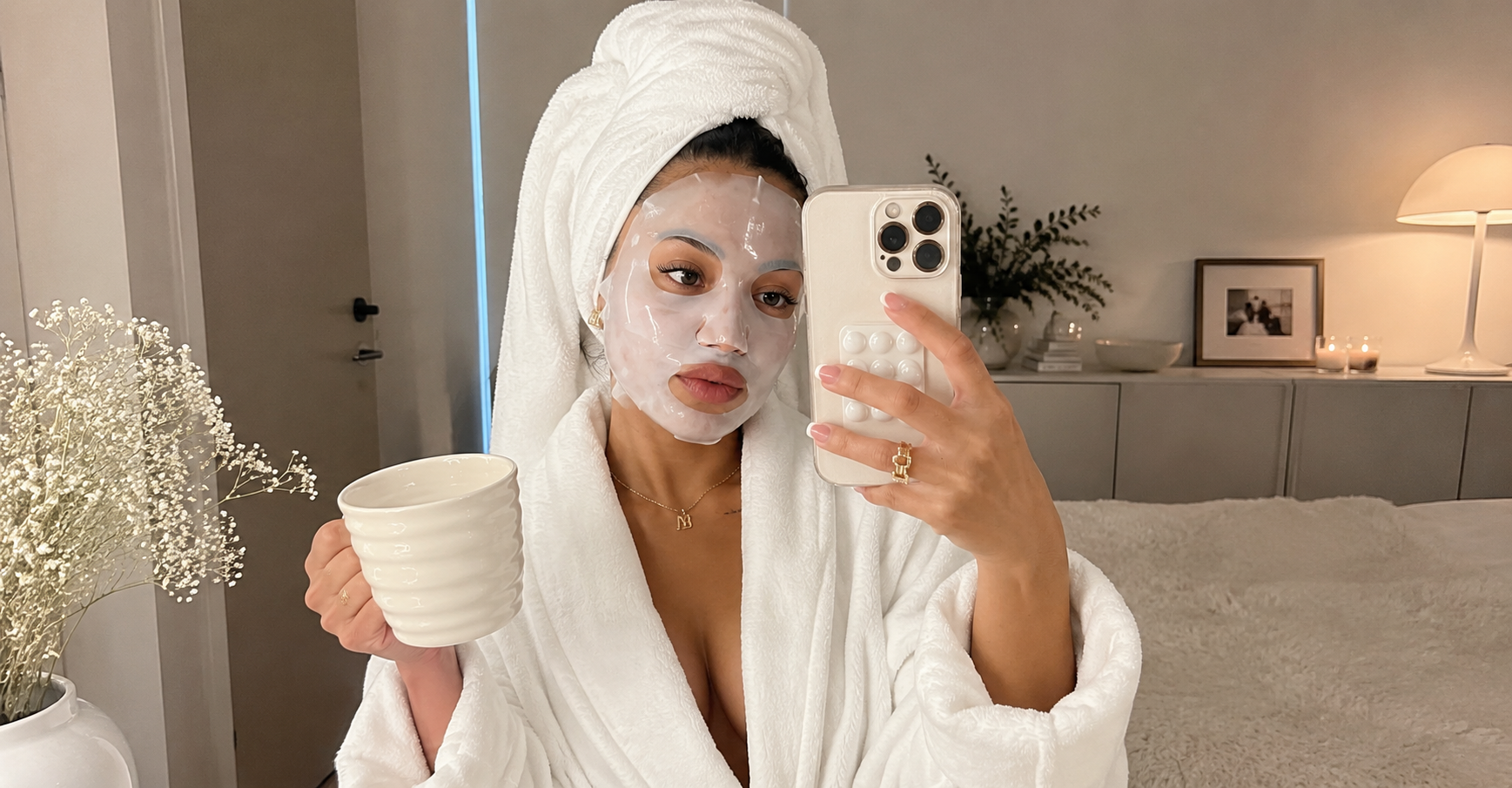
Picture your bathroom shelf right now. Ten, twelve, maybe fifteen products lined up. Serums for brightening, essences for hydration, treatments for every little skin concern. Your morning routine takes twenty minutes. Your evening routine takes even longer. And your skin? Still not quite where you want it to be.
You’ve spent hours researching skincare, watching tutorials, reading reviews, and figuring out which products might work for you. Somewhere between the double cleanse and the seventh serum, though, skincare stopped feeling simple. Instead of understanding your skin better, you started wondering whether you were doing enough.
But what if you’re actually doing too much? What if your skin doesn’t need another product? What if it simply needs less?
That’s the idea behind minimalist skincare: fewer products, fewer unnecessary steps, and more consistency. Once you understand what your skin actually needs, a routine doesn’t have to take half your morning or fill an entire bathroom shelf.
More Products Don’t Always Mean Better Skin
Your skin already has a pretty important job. It regulates oil, holds onto moisture, repairs itself, and protects you from things like pollution and irritants. When you keep adding strong ingredients, exfoliants, and treatments, it can become difficult for your skin to keep up. Too many actives can leave the skin feeling irritated, dry, reactive, or simply out of balance. That’s why minimalist skincare isn’t about being lazy or skipping important steps. It’s about being intentional. Good skin usually doesn’t come from having the longest routine. It comes from finding a few products that work for you and using them consistently.
Signs Your Routine Might Be Doing Too Much
Before buying anything new, take a look at how your skin is behaving. Too many active ingredients can contribute to irritation, especially when several are introduced at the same time. Constant exfoliation can also leave your skin feeling uncomfortable and sensitive. And if your instinct is to buy another product every time something goes wrong, pause for a moment. Sometimes the best thing you can do is remove a few steps and give your skin time to settle.
The Minimalist Skincare Routine
A simple routine doesn’t mean your skin gets less care. It means every step has a purpose. For most people, the basics are enough: cleanser, moisturizer, SPF, and one treatment when needed. The exact products can change depending on your skin type, but the structure can stay beautifully simple.
Morning Routine: Keep It Simple
Step 1: Cleanse Or Don’t
You don’t necessarily need a strong cleanser every morning. If you wake up with comfortable skin and very little oil, rinsing your face with lukewarm water may be enough. If you tend to wake up oily or sweaty, use a gentle cleanser that leaves your skin feeling fresh rather than stripped. The goal is simple: clean skin that still feels like skin. If your face feels tight or squeaky afterward, the cleanser may be doing too much.
Step 2: Moisturize
Moisturizer is worth keeping, even if your skin is oily. Skipping hydration doesn’t automatically make oily skin less oily. Your skin still needs water and a healthy barrier, regardless of how much natural oil it produces. This is where your skin type can guide your choice. For oily or combination skin, a lightweight gel or oil-free moisturizer usually feels more comfortable. Dry skin tends to prefer a richer cream, especially one with barrier-supporting ingredients such as ceramides. Sensitive skin can benefit from a simple soothing moisturizer with ingredients like aloe vera or chamomile, while avoiding unnecessary fragrance if that tends to trigger irritation. You don’t need a moisturizer that promises to do everything. Its main job is to keep your skin comfortable and supported.
Step 3: SPF Every Day
If there’s one step worth being consistent with, it’s sunscreen. Daily SPF helps protect your skin from UV exposure that contributes to premature aging, uneven tone, and dark spots. It also makes the rest of your routine more worthwhile because you’re protecting the progress you’re trying to make. Cloudy days count. Staying indoors doesn’t mean you get zero UV exposure either. Choose a formula you genuinely enjoy wearing because the best sunscreen is the one you’ll actually use every day. Your skin type can help here, too. Oily skin may prefer a lightweight or matte finish, while dry skin can feel better with a hydrating sunscreen. If your skin is sensitive, a fragrance-free mineral sunscreen may be a more comfortable choice.
Three steps. That’s enough for the morning.
Evening Routine: Clean, Treat, Restore
Nighttime is where you can make room for one targeted treatment. Not five.
Step 1: Cleanse
If you’ve worn sunscreen, makeup, or spent the day around a lot of pollution, double cleansing can be useful. Start with an oil or balm cleanser to break down sunscreen and makeup, then follow with a gentle water-based cleanser. On a quiet day without makeup or heavy sunscreen, one gentle cleanse may be all you need. There’s no prize for washing your face the most.
Step 2: Choose One Treatment
This is where minimalist skincare requires a little discipline. Pick one active ingredient based on what your skin actually needs instead of layering several treatments at once. If breakouts and excess oil are your main concern, niacinamide can be a simple option for supporting oil control and the appearance of pores. If your skin is dry and needs extra hydration, a hyaluronic acid serum can add another layer of moisture without making your routine complicated. For sensitive skin that tends to look red or irritated, azelaic acid can be a useful targeted treatment and is often chosen for its calming properties. And if your main concern is texture, fine lines, or uneven tone, you might choose a different active altogether.
The point isn’t to find the most powerful ingredient. It’s to find the one that makes sense for your skin and give it enough time to work.
also read: What You Eat Is Exactly What Your Skin Shows
Step 3: Moisturize
Finish with moisturizer. Your evening formula can be the same one you use in the morning, or slightly richer if your skin tends to feel dry. Think of this step as closing the routine rather than adding another treatment. You’ve cleansed your skin, applied the one active you need, and now you’re giving your barrier some support while you sleep. By morning, the goal isn’t to wake up with ten different products working overnight. It’s simply to have skin that feels calm, comfortable, and hydrated.
What to Expect When You Simplify
Minimalist skincare isn’t an overnight transformation. In the first couple of weeks, the biggest change may simply be that your skin feels calmer. Less tightness. Less random irritation. Fewer moments when you wonder why your face suddenly hates everything.
Give it time.
Around six to eight weeks of consistent care, you may start noticing more meaningful changes in things like texture, breakouts, and overall tone. Your results will depend on your skin, the products you choose, and the concerns you’re trying to address, so there’s no exact timeline that applies to everyone.
The important part is consistency.
When you’re using ten new products at once, it’s almost impossible to know what’s helping and what isn’t. With a smaller routine, your skin gives you clearer feedback. And that’s one of the biggest benefits of simplifying. You finally get to understand your own skin.
Less Skincare, More Intention
Minimalist skincare isn’t about owning the fewest products possible. It’s about knowing why each product is there. You only need a routine that covers the essentials, fits your skin type, and is realistic enough to follow every day. Cleanse when you need to. Moisturize. Protect your skin with SPF. Add one thoughtful treatment when there’s a specific concern you want to work on. Then give it time.
Your skin changes gradually, which makes progress surprisingly easy to miss. A little redness may disappear. Your texture may slowly improve. Breakouts may become less frequent. Those small changes are much easier to notice when you actually keep track of them.
That’s why a dedicated Glow Up Journal Planner with a built-in skincare tracker can be useful. Instead of trying to remember how your skin looked three weeks ago, you can record your routine, note how your skin responds, and see your progress over time.

Because sometimes a glow up doesn’t need another product. It needs consistency, patience, and a little structure.