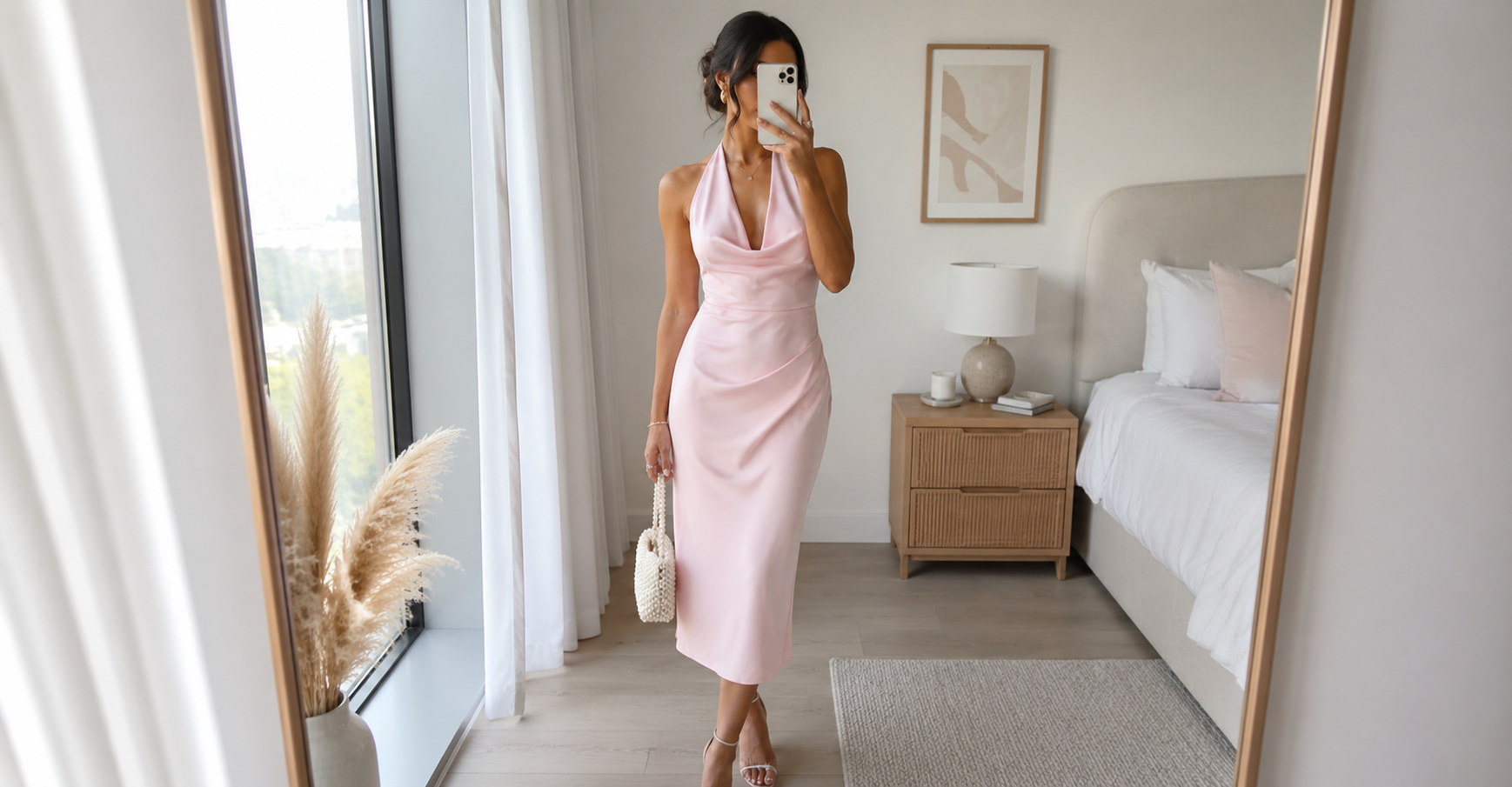
She walks into the room and nothing she’s wearing is new.
Nothing is from this season. Nothing was pulled from a “what’s trending now” list. If you tried to name the pieces, you couldn’t. Not because they’re forgettable, but because they’ve stopped being about what they are and started being about who’s wearing them.
And yet everyone notices her.
Not because of the clothes. Because of the certainty underneath them. There’s a stillness to how she carries herself, like she’s not waiting to be told she got it right. She already knows. So the question isn’t what she’s wearing. It’s what she knows that most women don’t.
Trends Were Never About Style
Here’s the thing almost no one says out loud: trends were never designed to make you look better. They were designed to make you feel behind.
That’s not cynicism, it’s mechanics. An industry built on repeat purchases needs your closet to expire on a schedule. It needs “in” to have an expiration date, because if nothing ever went “out,” there would be nothing left to sell you. The trend cycle doesn’t run on beauty. It runs on a quiet, recurring suggestion that what you already own, and by extension, who you already are, isn’t quite enough yet.
The most elegant women didn’t figure this out and get angry about it. They just stopped participating. She didn’t rebel against trends. She didn’t need to make a statement about it, didn’t need to announce her exit. She just stopped needing them and the difference between rebellion and indifference is the whole story. One is still a reaction. The other is freedom.
The Psychology: Why We Chase in the First Place
It’s worth being honest about why trend-chasing feels so magnetic in the first place, because it’s not shallow. It’s human.
Following trends is, underneath everything, a way of asking to belong. It’s a way of staying visible, current, safe from the particular discomfort of being seen as behind, or out of touch, or somehow not paying attention. That instinct deserves empathy, not judgment, it’s the same instinct that’s kept us tribal and connected for as long as we’ve existed.
But the most elegant women found a way to redirect that same energy inward. At some point, the question quietly changed. It stopped being what’s in right now and became what’s actually mine. That shift from scanning the outside world for cues to consulting the inside one for answers is where personal style is actually born. Not in a store. In that turn inward.
The Principles She Lives By
1. She Knows What She Looks Like (And Most Women Don’t)
This isn’t about vanity. It’s about accuracy. Most women are dressing for a version of themselves they’re guessing at, shaped by whatever they scrolled past that morning. She’s dressing for a version of herself she’s actually confirmed, through years of paying attention: what colors make her feel like herself, what shapes sit right on her frame, what makes her stand taller without trying.
That kind of self-knowledge is quiet, but it’s not small. It means she’s no longer decorating a stranger. She’s dressing someone she’s actually met.
In practice, this looks like speed. She’s not standing in front of the mirror negotiating. She reaches for the thing, puts it on, and moves on with her day — because the decision was already made, a long time ago, somewhere deeper than the closet.
2. Her Wardrobe Has a Point of View
A trend-driven closet is really a collection of other people’s opinions, worn one outfit at a time. Hers isn’t. Hers has a thesis, a consistent, recognizable sensibility that doesn’t need a caption to explain it.
This matters beyond fashion because a point of view is, at its core, a form of self-respect. It says: I’ve decided what I like, and I’m not renegotiating that every time something new gets introduced. That kind of consistency is rare, and it reads as strength, even when no one can articulate why.
You feel it when you’re around her, a kind of coherence. Nothing she wears seems to be apologizing for the last thing, or trying too hard to justify itself.
3. She Dresses for the Woman She Already Is, Not the One She’s Trying to Become
There’s a version of getting dressed that’s really a form of hoping. Hoping the outfit will turn you into someone slightly more impressive than you currently feel. She stopped doing that. She dresses for the woman sitting across from you right now, not an aspirational future edit of her.
This is a deeper act than it sounds. It means she’s made peace with who she is today, instead of using her wardrobe as a to-do list for who she’s supposed to become. That peace is what makes her presence feel settled instead of performed.
In the room, this reads as ease. She’s not holding her breath, waiting to see if the outfit “worked.” It already did, because it was never an audition.
Also read: Quiet Confidence: Why Some People Feel “Out of Everyone’s League” Without Trying
4. She Understands That Fit Is the Only Trend That Never Expires
Trends change silhouette, color, hemline, every season, on schedule. Fit doesn’t move. Something that sits correctly on your particular body will still look correct in ten years, because it was never chasing a moment, it was answering to a body, and bodies are more permanent than seasons.
This principle is really about attention. Prioritizing fit means she’s paid closer attention to herself than to the industry around her. That reallocation of attention, inward instead of outward, is, again and again, the thing that separates timeless from merely current.
You can spot it instantly. It’s the woman whose clothes seem to have been made for her, even when you know they weren’t.
5. She’s Made Peace With Repetition
Somewhere along the way, we absorbed the idea that repeating an outfit is a small failure, evidence you didn’t have enough options, weren’t keeping up. She doesn’t carry that belief anymore. She’ll wear the same coat all winter without a flicker of self-consciousness.
Underneath this is something quietly radical: she’s decided that being seen in the same thing twice doesn’t diminish her. Her worth was never tied to novelty in the first place, so repetition costs her nothing. That’s a strange kind of freedom, the freedom to be boring on purpose. In practice, it looks like calm. Getting dressed stops being a daily performance review and becomes something closer to a habit, unremarkable and easy.
6. She Lets Her Presence Do What Her Clothes Used to Have To
This is the quiet culmination of everything above. When you’re no longer using clothing to prove something, that you’re current, that you belong, that you’re enough, the clothes get to relax into being simply what they are: a frame, not a rescue mission.
What fills the space that anxiety used to occupy is presence. Actual eye contact. An unhurried way of entering a room. These things read as more expensive than anything in a closet, because they can’t be bought, they can only be arrived at. This is why she can wear something plain and still be the most memorable person in the room. The plainness was never the point. She was.
what actually changes when a woman stops following trends: it’s not her wardrobe. It’s her relationship with herself.
She stops feeling behind, because “behind” only exists in a race she’s opted out of. She stops feeling like she has to earn her place in a room before she’s allowed to relax into it. Slowly, without any single dramatic moment marking the change, she stops trying to fit into the room and starts to feel, instead, like she is the room. Not louder. Not more dressed up. Just more settled, more entirely there.
The real difference between the woman still chasing what’s next and the woman who already feels like herself: self-knowledge. Not perfect self-knowledge, just enough to make decisions from the inside out instead of the outside in. The Glow Up Journal Planner is where that self-knowledge gets built, one reflection and one intention at a time. It isn’t a shopping list, and it was never meant to be. It’s the place where you figure out what you actually love, what you want your presence to say before you ever open the closet door. Because style was never really found in a store. It’s found in knowing exactly who you are the moment you get dressed.